


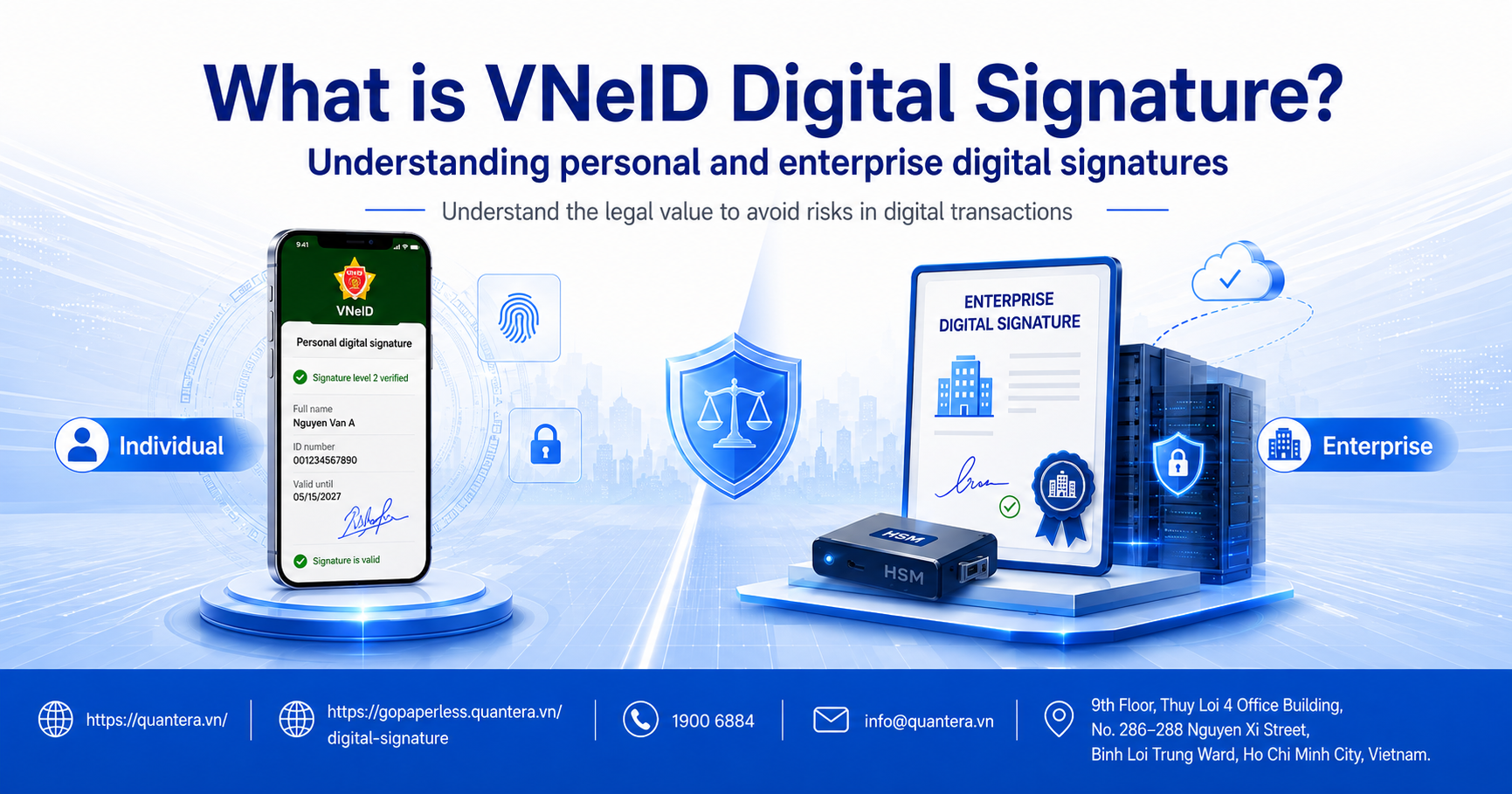
What is VNeID Digital Signature? Distinguishing between Personal and Corporate Signatures
In the process of digitizing administrative procedures, identity verification and the legal validity of data messages play a decisive role. Among current authentication solutions, the VNeID digital signature is attracting significant attention. However, mistakenly applying this type of signature in B2B transactions and enterprise management can lead to serious legal risks.
The boom of national identity platforms brings unprecedented convenience, but for managers, planning the legal system requires absolute clarity. Properly understanding legal regulations will help businesses optimize processes without facing compliance barriers.
1. Accurate Definition: What is a VNeID Digital Signature?
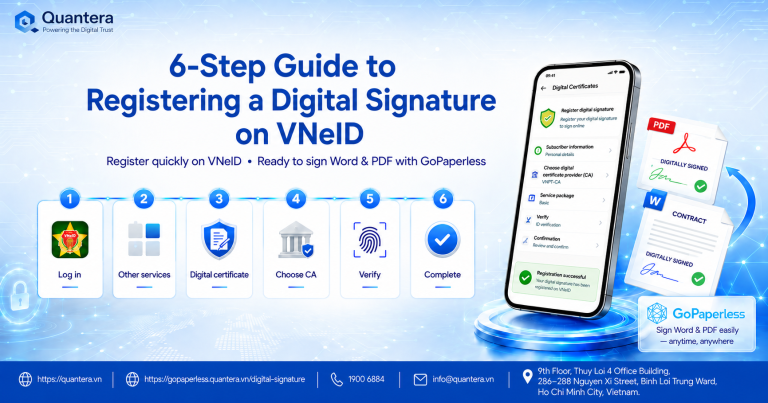
Based on regulations regarding electronic identification and authentication, the VNeID digital signature is integrated directly into the Level 2 VNeID application, using infrastructure managed and operated by the Ministry of Public Security. In essence, this is a securely encrypted “digital fingerprint” associated with a specific individual citizen.
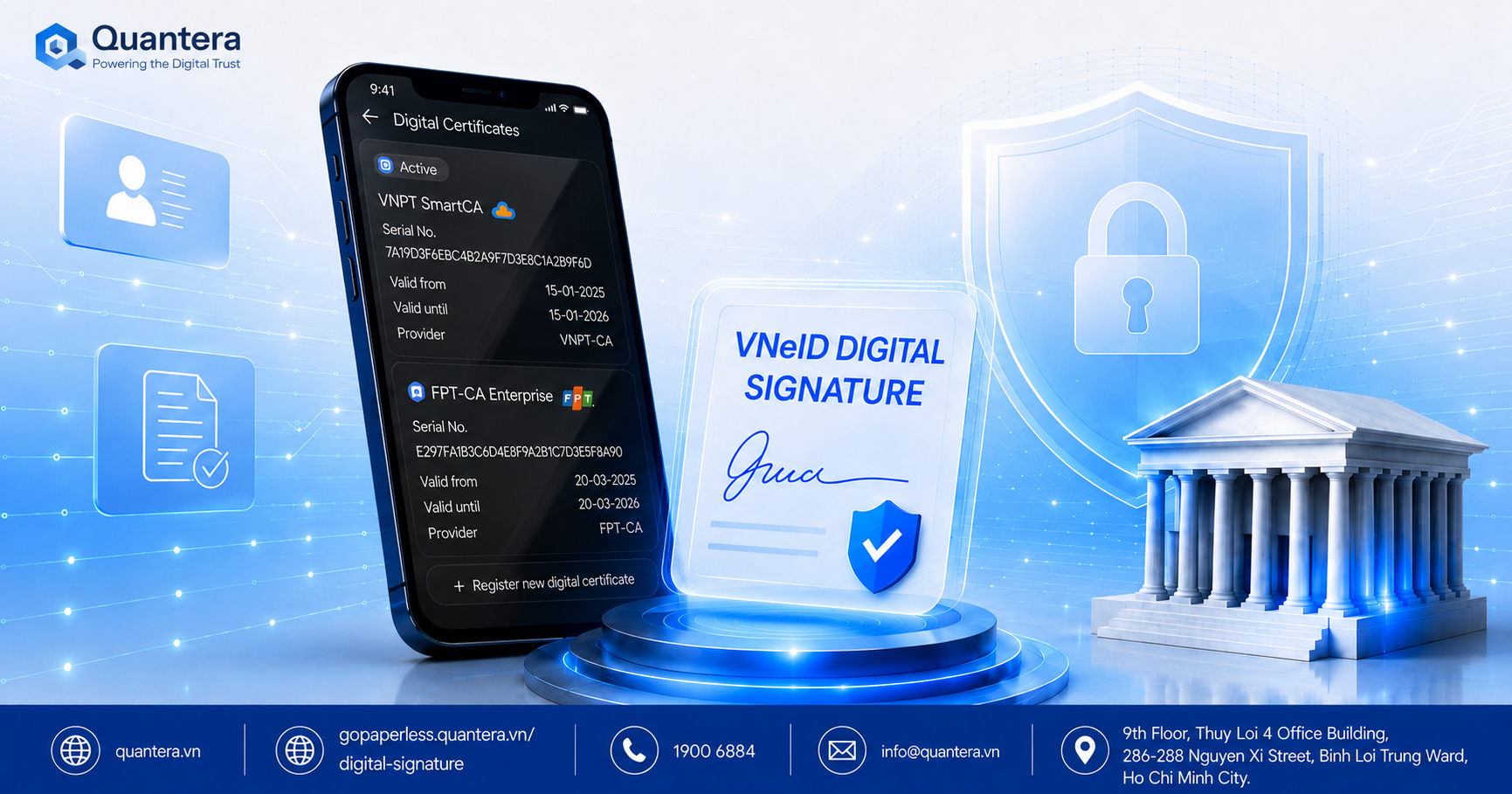
Under the 2023 Law on Electronic Transactions (effective from July 1, 2024), electronic signatures and digital signatures are recognized for legal value when fully meeting technical safety standards, accurately verifying the signer, and ensuring the integrity of the data message.
For VNeID, the core purpose is to support citizens in performing online public administrative procedures, submitting applications, and interacting with state agencies swiftly, transparently, and completely free of charge.
2. Decoding the Confusion: Why can’t VNeID register an “electronic seal”?
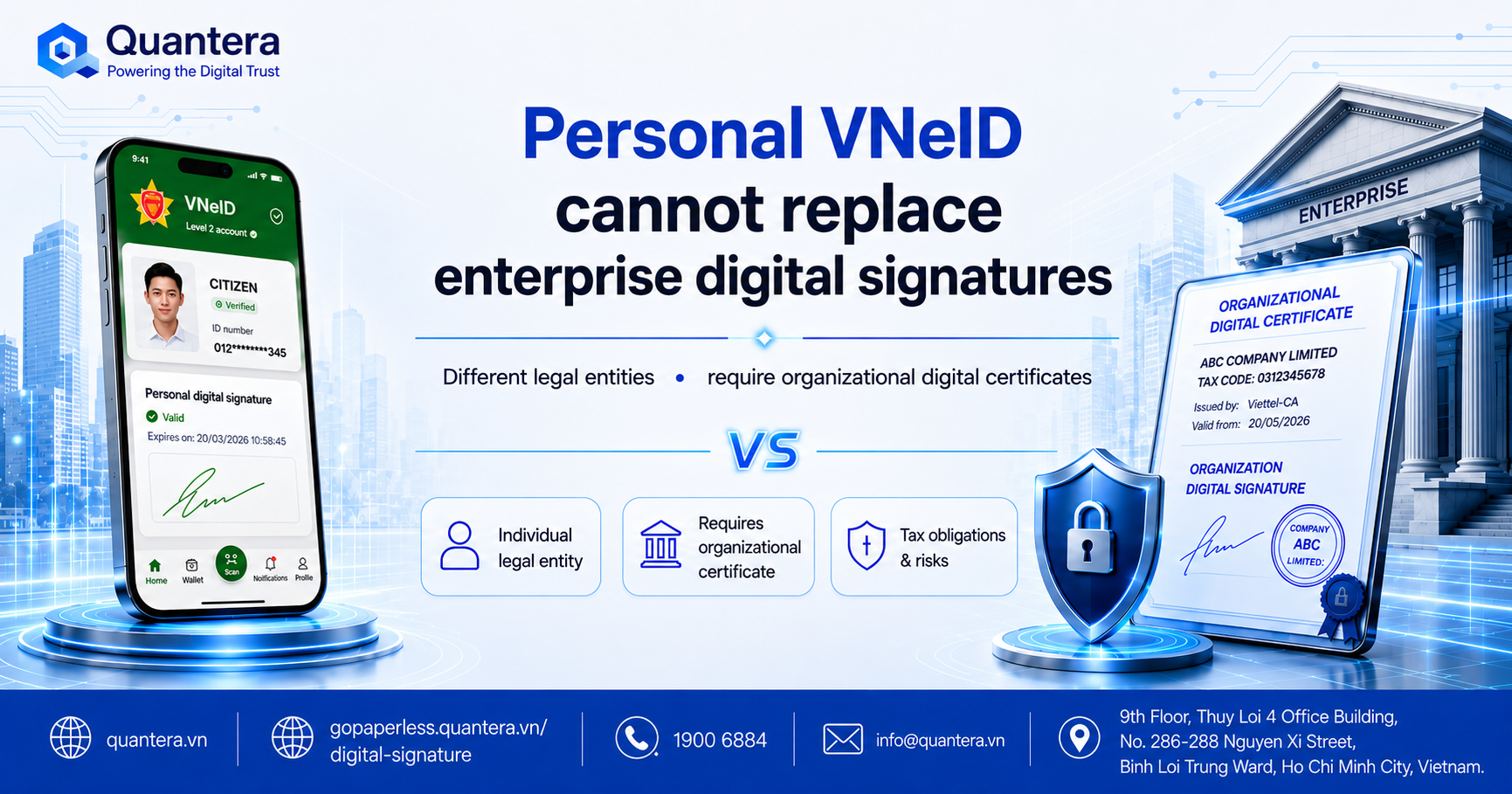
One of the common obstacles for managers when first approaching digital transformation is the expectation of using a personal VNeID account to sign legal documents, commercial contracts, or issue company invoices. However, this is not legally feasible due to core reasons:
Limitation of Legal Entity
The identity account and digital certificate on VNeID identify an individual citizen; they do not carry the legal entity status or tax code of an organization or business.
Regulations on Organizational Seals and Signatures
According to the 2023 Law on Electronic Transactions, organizational documents requiring a seal/signature in an organizational capacity must use a lawful corporate digital certificate. A personal VNeID cannot replace a corporate seal.
Operational Consequences
Misusing personal signatures for the company’s financial and accounting operations will violate tax declaration and electronic invoice issuance standards, easily leading to administrative penalties.
3. Clear Distinction: Personal Digital Signature and Corporate Digital Signature (USB Token/HSM)
To help C-levels easily compare and build a proper legal framework for their business, the comparison table below clarifies the technical and legal boundaries:
| Comparison Criteria | Personal Digital Signature (VNeID) | Corporate Digital Signature (USB Token / HSM) |
|---|---|---|
| Issued Subject | Individual citizens (Verified via Level 2 VNeID). | Businesses and organizations with legal entity status. |
| Management Infrastructure | Ministry of Public Security (National Identity System). | Public digital signature certification service providers (CA). |
| Legal Usage Purpose | Performing public services and personal administrative transactions. | Signing e-invoices, tax declarations, signing B2B economic contracts, organizational sealing. |
| Legal Nature | Represents the rights and obligations of a single citizen. | Represents the legal entity status and cash flow of organizational commerce. |
4. Comprehensive Enterprise Solutions from the Quantera Ecosystem
Once an enterprise has established a clear boundary between the personal VNeID digital signature and the corporate digital signature, the next challenge is comprehensively optimizing internal document signing workflows and B2B commercial transactions.
Businesses can synchronously integrate corporate digital signature flows into GoPaperless to fully automate the process of signing labor contracts, financial vouchers, and administrative documents without cumbersome paper printing.
Applying strict security standards and specialized digital signing technology from Quantera helps businesses strictly comply with legal frameworks under the 2023 Law on Electronic Transactions, absolutely protecting cash flows and business secrets.
Conclusion
A thorough understanding of the legal nature of the VNeID digital signature alongside specialized corporate digital signature systems will help managers completely eliminate compliance risks and build a solid, sustainable digital operational foundation.
Has your business properly standardized the legal framework for its electronic signing system and optimized its internal management processes?
Join the Q&A – HR, Labor & Payroll CommunityConnect with experts, receive quotes and in-depth legal documents for free!
Community Discussion