


Signing an Electronic Employment Contract Without Level-2 VNeID
During the digitalization of HR operations, one of the most common challenges faced by HR teams is when new employees have not yet installed or received approval for a Level-2 VNeID electronic identification account.
Many enterprises are concerned that this situation may interrupt the onboarding process and affect compliance when executing employment contracts.
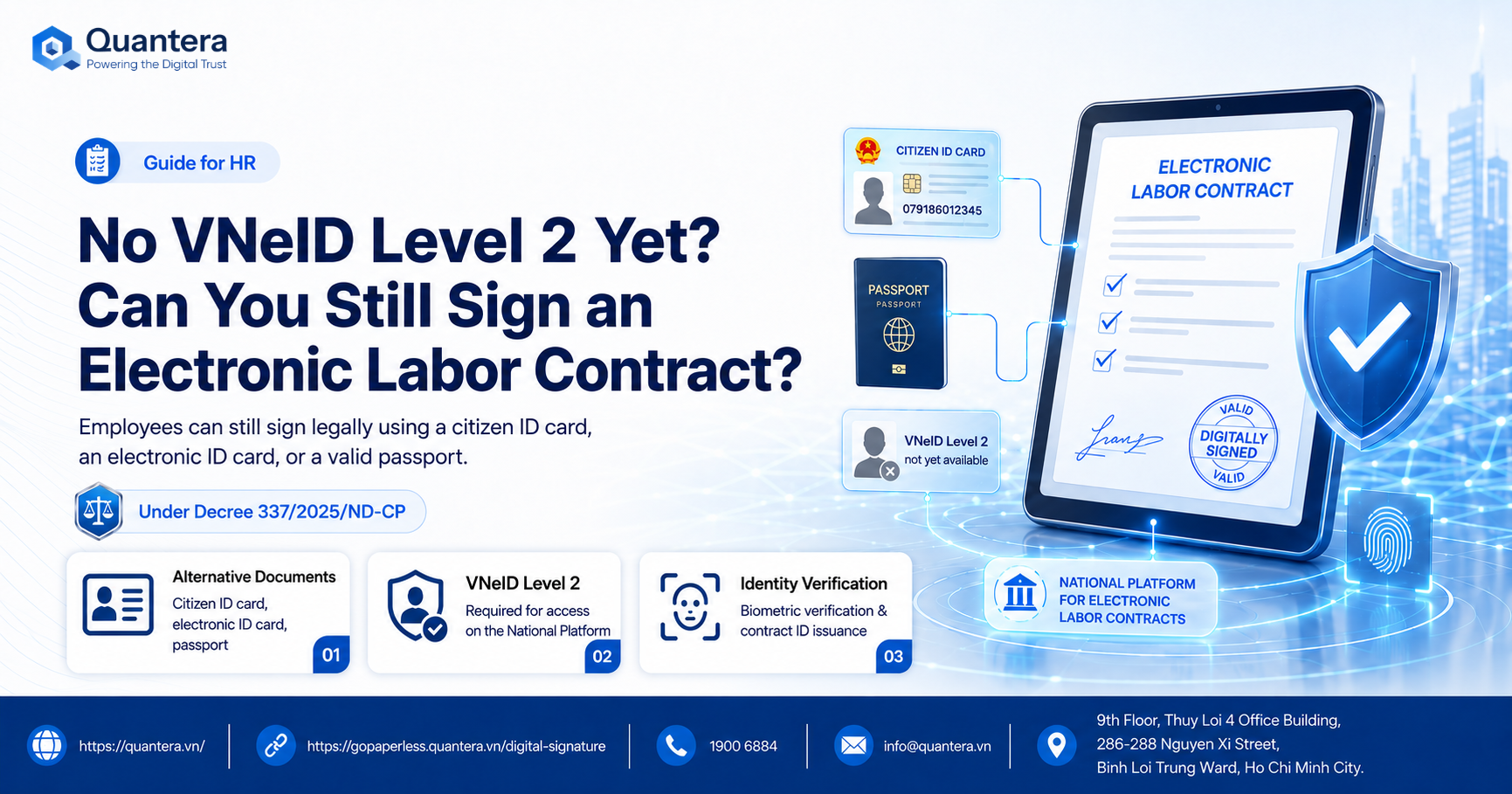
However, under the latest electronic employment contract regulations set out in Decree No. 337/2025/ND-CP, employees without Level-2 VNeID may still use other valid identification documents to legally execute contracts.
In this article, Quantera explains the available alternatives and the identity verification requirements that enterprises should consider.
1. Alternative Identification Documents for Signing a Contract Without Level-2 VNeID
Under Clause 2, Article 6 of Decree No. 337/2025/ND-CP, to ensure the legal validity of an electronic employment contract, an employee only needs to possess one State-recognized identification document.
If the employee does not yet have a Level-2 VNeID account, physical or electronic identification documents may be used as alternatives.
Citizen ID Card or Identity Card
A valid Citizen Identity Card (CCCD) or physical Identity Card.
Electronic Identity
Electronic identity credentials or an Identity Certificate.
Passport
A passport that remains valid at the time of signing.
Foreign Employees
A valid entry visa or documentation proving eligibility for visa exemption.
Key takeaway for HR: A new employee who does not yet have Level-2 VNeID may still proceed with contract execution using a valid physical Citizen ID Card.
2. Why Is Level-2 VNeID Required to Access the National Platform?
Although signing with physical identification documents is permitted, Circular No. 08/2026/TT-BNV draws a clear distinction between “Contract Execution (Signing)” and “Management (Lookup)”.
Signing the Contract
Employees may use other valid identification documents when Level-2 VNeID is not yet available.
Accessing the National Platform
A Level-2 VNeID electronic identification account acts as the “key” allowing employees to log in and access contract data.
With Level-2 VNeID, employees can directly access the functions of the National Electronic Employment Contract Platform.
- Lookup and verification rights: Employees can independently access the platform to verify the integrity of contracts signed with their employer.
- Data sharing rights: Employees can extract and share electronic contract data for use in other administrative procedures.
- Such data may support procedures such as bank loan applications or social insurance benefit processing without requiring a separate confirmation letter from the employer.
Therefore, although HR teams can apply flexibility at the time of signing, enterprises should still establish policies encouraging and guiding employees to complete Level-2 VNeID registration during probation.
3. Identity Verification Responsibilities of the eContract Platform
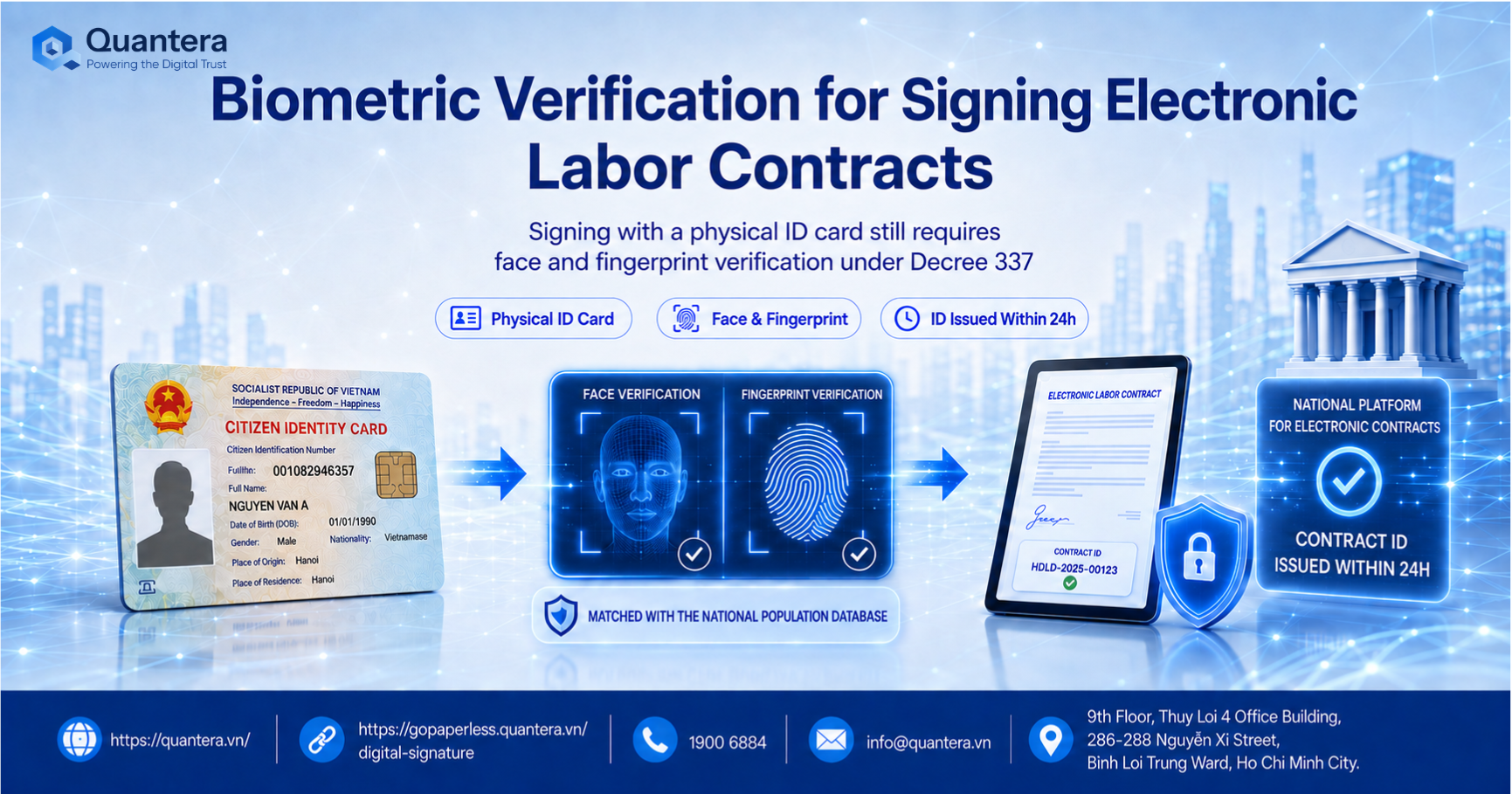
When an employee signs using a physical Citizen ID Card without going through the VNeID application, responsibility for identity verification is transferred to the provider of the electronic employment contract solution (eContract).
To comply with electronic employment contract requirements under Decree 337, an enterprise’s eContract system must meet the required technical standards for verifying the identity of the contracting party.
The system must perform biometric verification of the signer, including facial and fingerprint data, against original data stored in the National Population Database.
Important for HR: Identity verification is a critical step before contract data is submitted to the National Platform as part of the contract ID issuance process.
Under the process described in this article, contract data must be processed for the issuance of a unique contract ID within 24 hours.
4. The GoPaperless Ecosystem from Quantera: Solving Multi-Method Identity Verification
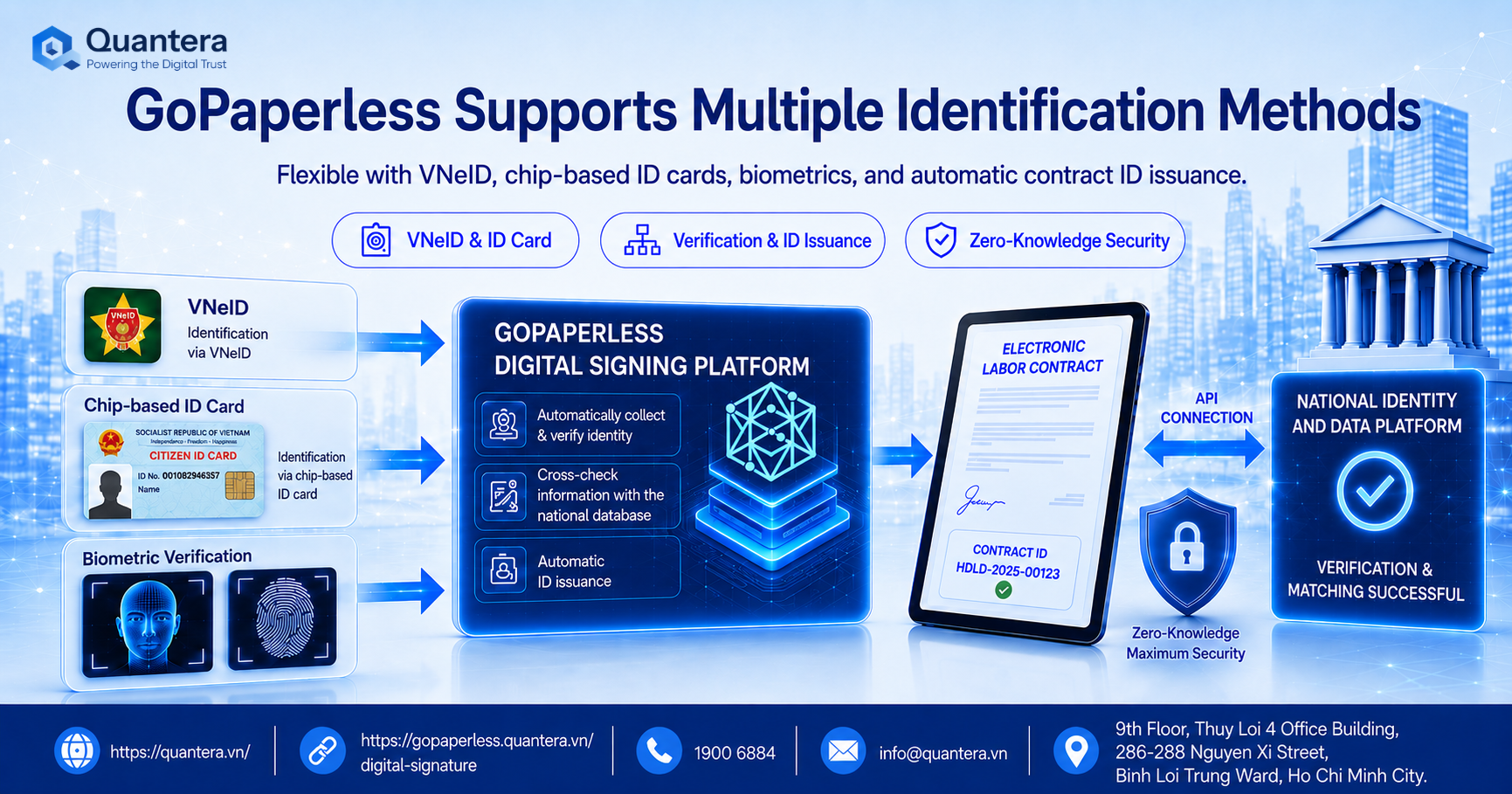
Managing a workforce that includes both employees with VNeID and employees who only have physical Citizen ID Cards requires a highly flexible operating platform.
Recognizing this operational challenge, Quantera has developed the GoPaperless digital ecosystem to support HR departments.
Multiple Identification Methods
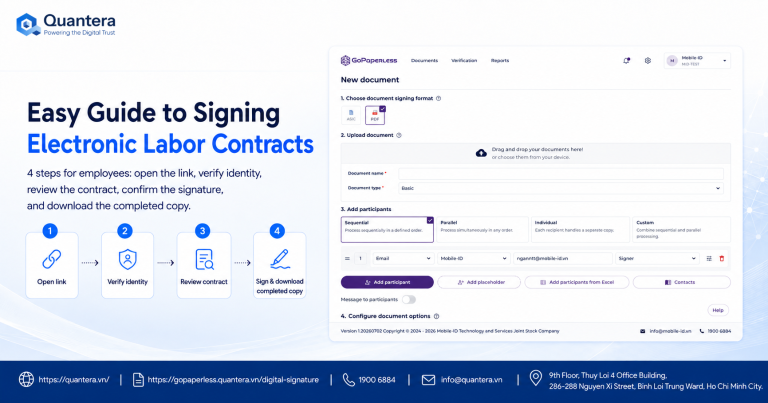
GoPaperless supports flexible signing workflows, allowing employees to use VNeID, chip-based Citizen ID Cards, or suitable biometric authentication methods.
Automated Verification and Contract ID Processing
The system automatically handles API communication with the National Population Database and the Ministry of Home Affairs’ Platform.
This helps HR teams reduce manual work during identity verification and contract ID processing.
Enhanced Data Security
With Zero-Knowledge technology, sensitive information such as payroll data and employee positions is encrypted locally, helping strengthen enterprise data protection.
5. Conclusion
Employees can legally sign electronic employment contracts even if they have not yet activated Level-2 VNeID, provided that valid alternative identification documents are used.
However, to ensure a transparent and secure process and support valid contract ID processing, enterprises need a signing platform capable of appropriate identity verification and reconciliation.
Does your enterprise already have a contract signing solution that meets the requirements of Decree 337?
Join the Zalo Group Q&A – HR, Labor and Payroll Community to download the “Guide for Employees to Install and Link VNeID”.
Join the HR, Labor and Payroll Community
Community Discussion